
Background
Nickel laterite deposits consist of materials with different physical, chemical, and mineralogical characteristics. Variations across the laterite profile can influence how each material responds to weathering and its potential interaction with water and the surrounding environment.
Understanding these characteristics is therefore an important part of environmental management in nickel mining. A comprehensive laboratory assessment can provide information not only on the elemental and mineralogical composition of the materials, but also on their potential to generate acidity and release dissolved constituents during weathering.
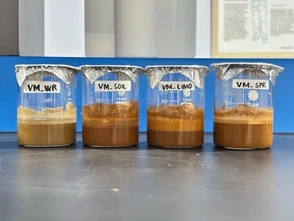
For PT Vale Indonesia's mining operation in Morowali, Ganeca Environmental Laboratory conducted a geochemical characterization study on representative nickel laterite materials, including topsoil, limonite, saprolite, and waste rock.
Challenges
Different materials within a nickel laterite profile can exhibit different geochemical characteristics. Therefore, evaluating their environmental behavior requires more than a single analytical parameter.The key challenge was to understand:
How do different laterite materials behave from a geochemical perspective, and what is their potential to generate acidic drainage under weathering conditions?
This requires both material characterization and an assessment of how the materials may behave over time when exposed to water and weathering processes.
Solution
Ganeca Environmental Laboratory applied a comprehensive geochemical testing approach combining elemental, mineralogical, and acid-forming potential assessments.
1. Geochemical Characterization
The first stage involved X-Ray Fluorescence (XRF) to determine the elemental composition of the materials, followed by X-Ray Diffraction (XRD) to identify their mineralogical phases.
The characterization was further supported by Scanning Electron Microscopy–Energy Dispersive Spectroscopy (SEM-EDS) to observe material morphology and elemental distribution at the microscopic scale.
2. Static Testing
Static testing was conducted to assess the potential acid-forming characteristics of each material based on its geochemical composition. The test evaluated parameters including sulfur content, acid-neutralizing capacity, acid-generating potential, and related indicators to support classification into Potentially Acid Forming (PAF), Non-Acid Forming (NAF), or Uncertain (UC) categories. The testing followed SNI 6597:2021.
3. Kinetic Testing
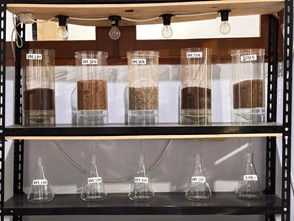
To complement the static assessment, kinetic testing was performed to obtain a more detailed understanding of the materials' behavior during simulated weathering. The test used a Free Draining Column Leach Test (FDCLT) with weekly leaching cycles over 12 weeks, allowing the laboratory to monitor changes in leachate characteristics over time. Parameters including pH, ORP, TDS, TSS, and dissolved metals were monitored throughout the testing period.
Results and Benefits of Implementation
The combination of static and kinetic testing provided a more comprehensive view of the environmental behavior of the tested laterite materials. The study therefore provided PT Vale Indonesia with:
· Geochemical and mineralogical characterization of different laterite materials;
· Assessment of their acid-forming potential;
· Time-dependent leachate behavior under simulated weathering conditions; and
· Laboratory data to support environmental assessment and material management planning.
By combining multiple analytical techniques with static and kinetic testing, the laboratory results provide a stronger technical basis for understanding how different mining materials may behave under environmental conditions.